Fair Use Blog

The Manifesto of the Sixteen (1916)

Now available thanks to Shawn P. Wilbur at Two-Gun Mutualism & the Golden Rule:

[Here is a translation of the controversial "Manifesto of the Sixteen," the document issued by Peter Kropotkin, Jean Grave and others, advocating support for the Allies and opposition to Germany in World War I. I had promised this to members of the Anarchist Task Force on Wikipedia quite awhile back, to go with their article on the Manifesto.]

The Manifesto of the Sixteen

From various sides, voices are raised to demand immediate peace. There has been enough bloodshed, enough destruction, they say, and it is time to finish things, one way or another. More than anyone and for a long time, we and our journals have been against every war of aggression between peoples and against militarism, whatever uniform, imperial or republican, it dons. So we would be delighted to see the conditions of peace discussed—if that was possible—by the European workers, gathered in an international congress. Especially since the German people let itself be deceived in August 1914, and if they had really believed that they mobilized for the defense of their territory, they have since had time to realize that they were wrong to embark on a war of conquest.

Indeed, the German workers, at least in their associations, more or less advanced, must understand now that the plans for the invasion of France, of Belgium, and of Russian had long been prepared and that, if that war did not erupt in 1875, 1886, 1911 or in 1913, it was because international relations did not present themselves then as favorably and because the military preparations were not complete enough to promise victory to Germany. (There were strategic lines to complete, the Kiel canal to expand, the great siege guns to perfect). And now, after twenty months of war and dreadful losses, they should realize that the conquests ...

Read the whole thing at Two-Gun Mutualism & the Golden Rule.

Friday’s Reading: one on post-WWII bohemian-anarchism, one on early anarcho-capitalism, and some mutualist portraits

I spent most of the day booked with a consulting client and doing some house-cleaning, which was much-needed anyway but especially so in light of an impending family visit from Michigan and from Maine. Still, I had the time to catch up on some things I’ve been meaning to read. It all turned out to be PDFs I’d accumulated, but now that I have a Kindle (thanks to a Christmas present) it’s actually no longer excruciating for me to sit around reading PDFs. In any case:

  • I got the chance to read The New Cult of Sex and Anarchy (!), Mildred Edie Brady’s shocking exposé of the emerging Northern California counter-culture — of 1947. (The article went into the April 1947 issue of Harpers. (Suggested by Jesse Walker.)

    This is, roughly, the intellectual and artistic milieu that the Beats would eventually emerge from, and monopolize in the public consciousness; but that particular coffeeklatsch was still 10 years away from their public breakthrough, and in 1947 there was a lot more attention on Henry Miller, California surrealism, and the occasional cameo by Man Ray and Kenneth Rexroth. I should say that the article is not as stupidly alarmist as the title that some editor no doubt inflicted on it; maybe the whole thing would have read like more of an awful calumny when the story was published, on the eve of the Great Sexual Backlash, when sexualism was something more hotly contested than it now is.

    Anyway the sex part in the article has to do with the author’s obsession with the bohemian mens’ obsession with Wilhelm Reich. The anarchy part refers, by turns, either to an artistic radical indifference to State and social authority; or, at times, to genuine intellectual anarchism. Anyway, I don’t know that the article will offer you any really deep insights, but it’s fun, and a nice time-piece, and also a rare glimpse (even if distinctly from the outside) of the anarchist/bohemian milieu, such as it was, in the now-rarely-discussed, now-mostly-forgotten years just after World War II. It also told me little about, but gave me the titles of, a number of new little publications to chase down. Anyway. Here’s some of the interesting, and some of the ugly, on the part of the subjects:

    Pacifica Views was openly anarchist and its influence was enhanced by the sympathetic representation of the [Conscientious Objector’s] position in the community. Its editor, George B. Reeves, successfully accomplished this not only through the magazine itself but also in the Human Events pamphlet Men Against the State. Even in Pacifica Views, however, the anarchism-sexualism tie was aired by several weeks’ discussion of Wilhelm Reich’s thesis and the magazine’s political position was embellished with a sure come-on for the young—sexual freedom for the adolescent and the deep political significance that lies in developing a healthy sexuality among the masses of the people who are endemically neurotic and sexually sick.

    ANARCHISM is, of course, nothing new to the West. There have been in both Seattle and San Francisco small anarchist groups ever since the first World War and before, and remnants of them have persisted. Some are hangovers from the days of the Wobblies. Others are made up of first and second generation European immigrants—like the San Francisco group, the Libertarians, which is largely Italian. All during the thirties these small groups existed without benefit of attention from young intellectuals who in those days were most apt to be thumping their typewriters on behalf of the United Front.

    Not long after December 7, 1941, however, the poet Kenneth Rexroth left the ranks of the Communists in San Francisco and turned both anarchist and pacifist. Around him, as around Miller, there collected a group of young intellectuals and writers who met weekly in self-education sessions, reading the journals of the English anarchists, studying the old-line anarchist philosophers like Kropotkin, and leavening the politics liberally with psychoanalytic interpretations from Reich. It was and is, however, a decidedly literary group in which politics is all but submerged by art, where poems, not polemics, are written, and where D. H. Lawrence outshines Bakunin—Lawrence the philosopher, of Fantasia and the Unconscious rather than Lawrence the novelist.

    Nevertheless, the anarchism of this group is taken seriously enough to call forth tokens to the political as well as the sexual; and at meetings of the Libertarians, today, you will be apt to find young intellectuals sprinkled among the moustachioed papas and bosomed mamas [sic! Really? —R.G.] who, until recently, had no such high-toned co-operation. In this particular group around Rexroth, the Henry Miller kind of anarchism is held to be irresponsible, for Miller goes so far on the lonely individualistic trail as to sneer at even anarchist organization.

    To the outside observer, however, the differences between the Miller adherents and the Rexroth followers are more than outweighed by their similarities. They both reject rationalism, espouse mysticism, and belong to the select few who are orgastically potent. And they both share in another attitude that sets them sharply apart from the bohemians of the twenties. They prefer their women subdued—verbally and intellectually.

    No budding Edna St. Vincent Millay or caustic Dorothy Parker appears at their parties. If the girls want to get along they learn, pretty generally, to keep their mouths shut, to play the role of the quiet and yielding vessel through which man finds the cosmos. Although there are a few women writers found now and then in Circle [a prominent literary magazine from the San Francisco scene] — Anais Nin is a favorite and Maude Phelps Hutchins (wife of Robert Hutchins, chancellor of the University of Chicago) has appeared—the accepted view of both the wome nand the men seems to be that woman steps out of her cosmic destiny when the goal of her endeavor shifts beyond bed and board. This doesn’t mean that the women are economically dependent, however. Most of the girls hold down jobs. But the job is significant only in that it contributes to a more satisfactory board.

    — Mildred Edie Brady (1947), The New Cult of Sex and Anarchy, Harper’s (April 1947).

    Well, nobody could say that revolooshunerry chauvinism is some kind of new problem in the scene; Manarchy abides.

  • I also finished off Jarret Wollstein’s Society Without Coercion: A New Concept of Social Organization (1969), one of the first documents (to my knowledge) to advocate self-described, self-identified anarcho-capitalism. Wollstein was a dissident Objectivist (less dissident and more uniformly Objectivist-influenced than, say, Roy Childs). It’s been suggested that Wollstein was the first to coin the phrase anarcho-capitalism. I don’t know if that’s right or not, but in any case here’s some of his reasons for employing the term; in this one he mentions it as a term already floating around the circles he’s a part of.

    2.4 Naming A Free Society

    To name the social system of a free society is not as nominal a task as at first it may appear to be. It is not only the existence of complete social freedom which is absent from today’s world, but also the idea of such freedom. There is, in truth, probably no word in the English language which properly denotes and connotes the concept of the social system of a free society.

    A number of persons who have recognized the fallacies in the advocacy of not just this or that government, but who have also recognized the inherent contradiction in government itself (such as Murray Rothbard and Karl Hess) have decided that since archy means rule, or the presence of government — which they are against — they will designate their sociological position as anarchy — no rule, or the total absence of government. This decision is unfortunate, to say the least, since it embodies several epistemological fallacies. Firstly, the term anarchy is a negative one; to say that one is for anarchy is only to say that one is against government. It is not to say what are the positive social forms which one advocates. This may be perfectly fine if one, in fact, advocates no positive social forms. However, if one advocates freedom and its economic expression laissez-faire capitalism, the designation anarchy or anarchism, of itself, will hardly suffice. Secondly, anarchy merely means no rule not no coercion. It is perfectly possible to have an anarchist society with coercion initiated by random individuals and robber gangs. So long as these persons do not claim legal sanction or create formal and enduring institutions, one would have a very coercive anarchist society. Further, it is possible for there to be an anarchist society in which no force was initiated, although due to the personal irrationality and mysticism of its occupants, no rational person would want to live in it. For example, imagine a society occupied exclusively by non-violent schizophrenics, or equivalently, by Zen Buddhists. [sic. Really? —RG]

    Less important, but also significant, is the fact that the term anarchy, in present usage, has come to mean not only no rule but also has come to imply social chaos and senseless violence. This is a corruption of the original meaning of the term, but nevertheless it makes the word anarchy an impediment rather than an implement to communicating the concept of a free society. When one wishes to defend in principle and implement in reality a free society, it is irrational to deliberately choose a term which one knows will alienate, at the outset, persons with whom one eventually intends to deal.

    Another term has been suggested by Robert LeFevre, advocate of the free market and founder of Ramparts College [sic—RG] in California. Mr. LeFevre rejects the term anarchy primarily because of its past close association with collectivism and, recognizing the fallacy of limited government, proposes in its stead the word autarchy, meaning self-rule. Again this term suffers several epistemological faults. It fails to state how one should rule oneself, and in fact says nothing about the nature of social order.

    Next we have the term voluntarism, also advocated by many proponents of the term anarchism. This expression is superior to the term anarchy in that it does exclude coercion from its subsumed concept of social order. It is therefore acceptable for this communicative purpose. However, several necessary differentia in the valid concept of a free society are still lacking. Conceivably one could have a voluntary collectivist society (at least for a while), in which individuals voluntarily become slaves, as well as a voluntary individualist society, in which the individual is his [sic —RG] own master. Consequently, this term is not fully satisfactory.

    A phrase in increasingly popular use which I advocate as the best presently available specification of the socio-economic position of persons advocating a society of consistent rational freedom is anarcho-capitalism. Here the prefix anarcho indicates the lack of coercive government, and the word capitalism indicates the positive presence of free trade based upon respect for man’s [sic] rights. This term is not ideal: the prefix anarcho has negative semantic value, and the term capitalism is intimately associated with the present American statist mixed economy. However, it would seem to be the best term which we now have, and consequently we will use it (and in more limited contexts voluntarism) in the remainder of this essay.

    — Jarret B. Wollstein (1969), Society Without Coercion: A New Concept of Social Organization. Society for Rational Individualism. 21-22.

    A bit further down there’s also some material on strategy. After rejecting retreatism, and purely theoretical education, Wollstein advocates counter-institutions. Sort of….

    4.1 Alternatives to Government Institutions

    How often have you presented a brilliantly stated, logically air-tight thesis to a collectivist only to have him [sic] say, That’s fine in theory, but in practice it wouldn’t work. THis of course is an absurdity, but it is next to impossible to convince most collectivists of this fact by purely forensic ability. Clearly, if we are to convince the great majority of American intellectuals, something more than logical theorizing is necessary.

    What I propose is the actual creation of alternatives to government institutions — initially schools, post offices, fire departments and charity; later, roads, police, courts and armed forces. Libertarians recognize that government services are hopelessly obsolete and inherently economically unsound. With the present system it is patently impossible to assess the costs of education and police investigations at all. Rather than trying to politically convince two hundred million Americans that this is so on the basis of rational economic theory, libertarians should instead demonstrate the fact by actually creating the far superior institutions of a free society. Fire departments, schools and post offices should immediately be set up by men and women who understand the free market and who are competent as businessmen [sic].

    One way to do this would be for rational businessmen [sic] to cooperate with libertarian students and theorists in order to establish such enterprises as franchise operations, using all of the skills of modern industry. Simultaneously, libertarians should act politically to free the market to facilitate these enterprises; meanwhile theoreticians should attempt to infiltrate the mass media, or start their own popular magazines and telecommunications facilities to emphasize to the American people that these institutions are working far better than their governmental equivalents; and then to explain why they are doing so. Such a dramatic demonstration of the efficacy of the free market might well accomplish what mere talk alone is unable to do: free America.

    How can the men and women of America fail to understand the value of freedom in all areas of human enterprise when private post offices, roads and police are actually providing far better services than government is capable of delivering?

    — Jarret B. Wollstein (1969), Society Without Coercion: A New Concept of Social Organization. Society for Rational Individualism. 40.
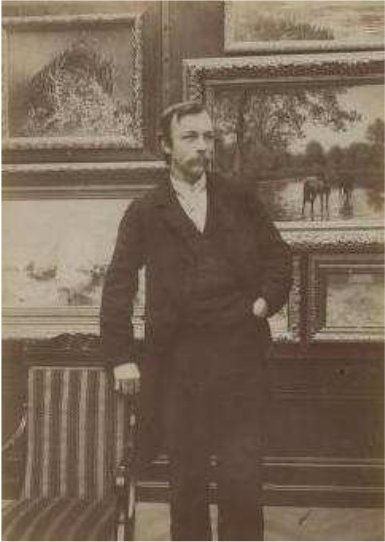

  • Finally, I got a start on Dear Tucker: The Letters from John Henry Mackay to Benjamin R. Tucker, which run from 1905 to 1933 (ed. and trans. by Hubert Kennedy, 2002). I haven’t gotten deep enough in for any interesting pull-quotes from the text. But I did come across these rad portraits of Clarence Lee Swartz (a frequent contributor to Liberty and author of What Is Mutualism?) and Steven T. Byington (another frequent Liberty correspondent, founder of Liberty’s Anarchist Letter Writing Corps, and the translator of Stirner). Both photos are from the Labadie Collection.

    Clarence Lee Swartz (1868-1936)

    Steven T. Byington (1869-1957)

Now online: full text of MOTHER EARTH IX.9 (November, 1914)

I'm happy to follow up our earlier announcement with an announcement that the Fair Use Repository now features the complete text of all the articles from the November 1914 issue of Mother Earth.

Most of the issue is occupied with Anarchist responses to, and debate over, the outbreak of World War I: Kropotkin on the Present War reprints Peter Kropotkin's letter to Gustav Steffen, supporting the French government's fighting in World War I; Alexander Berkman's In Reply to Kropotkin calls Kropotkin to task and argues that Anarchists should oppose all sides in all government wars. Goldman and Berkman followed this argument with a reprint of Chapter I of Kropotkin's own Wars and Capitalism, written in 1913, in which Kropotkin had skewered the French government's motives and argued that wars were the product of imperial capitalism and that the reason for modern war is always the competition for markets and the right to exploit nations backward in industry. In addition to the exchange over Kropotkin's letter, this issue also features That Economic Army, an article by Guy A. Aldred originally printed in the London Spur, which traces how the state and capital, during wartime, deformed the entire economy to draw not only men, but entire industries, into collaboration with the war machine, out of economic interest.

Alongside the discussion of the war, Vol. IX. No. 9 also features:

  • The Persecution of Margaret Sanger by Harry Breckenridge, a defense and a call for working-class solidarity with Margaret Sanger and the Woman Rebel, then facing Federal prosecution for obscenity (for distributing articles on birth control and scientific information about sexual health).

  • Black Friday of 1887 by M. B., a slashing review of the Socialist journalist Charles Edward Russell’s discussion of Haymarket in his memoirs, and a commemoration of the Haymarket martyrs hanged 11 November 1887.

  • My Lecture Tour by Alexander Berkman, an announcement of Berkman's upcoming lecture tour of the Midwest, with talks on War--At Home and Abroad, Unemployment and War, War and Culture, The War of the Classes, Is Labor Justified in Using Violence? Crime--In and Out of Prison, and The Psychology of Crime and Prisons.

  • Emma Goldman Dates by Emma Goldman, an announcement of Emma Goldman's upcoming lectures in Chicago on anti-militarism, Anarchism, and a lecture series on drama , as well as announcing dates for upcoming lecture series elsewhere in the Midwest.

I'm happy to have this issue of Mother Earth available in full. More issues should be coming soon.

Read, cite, and enjoy!

Now online: four articles from MOTHER EARTH (November, 1914): Anarchist responses to World War I and a commemoration of the Haymarket martyrs

I'm happy to announce that the Fair Use Repository now features four complete articles from the November, 1914 issue of Mother Earth:

  • Kropotkin on the Present War by Peter Kropotkin -- a reprint of Kropotkin's letter supporting the French government's fighting in World War I;

  • In Reply to Kropotkin by Alexander Berkman -- in which Berkman calls Kropotkin to task, argues that the international working class has no real stake in bosses' wars, and calls on Anarchists to oppose all sides in all government wars.

  • Wars and Capitalism (Chapter I) by Peter Kropotkin, a reprint of Kropotkin's earlier analysis of war, from 1913, in which he argued that the reason for modern war is always the competition for markets and the right to exploit nations backward in industry.

  • Black Friday of 1887, by M. B., a slashing review of the Socialist journalist Charles Edward Russell's discussion of Haymarket in his memoirs, and a commemoration of the Haymarket martyrs hanged 11 November 1887.

These are the first set of articles to be put online from Mother Earth Volume IX, Number 9; more will come soon. I believe that the complete issue should be available online by the end of the week.

Read, cite, and enjoy!