Fair Use Blog

Over My Shoulder # 49: Sic Semper

Here’s the rules.

  1. Pick a quote of one or more paragraphs from something you’ve read, in print, over the course of the past week. (It should be something you’ve actually read, and not something that you’ve read a page of just in order to be able to post your favorite quote.)

  2. Avoid commentary above and beyond a couple sentences, more as context-setting or a sort of caption for the text than as a discussion.

  3. Quoting a passage doesn’t entail endorsement of what’s said in it. You may agree or you may not. Whether you do isn’t really the point of the exercise anyway.

Here’s the quote. This is from my class readings, Herodotus (c. 449 BCE), The Histories (trans. G.C. Macaulay and Donald Lateiner); I read it during one of my study jags over at The Coffee Cat. It’s Herodotus’s version of the end of the life of Cyrus the Great, the first King of Kings of the Persian Empire. At this time in his life, Cyrus had gained supreme power over the Persians, taken power over the old Median Empire, and set out on decades of large-scale conquest, subjugating nearly all of the peoples in Asia Minor, the Levant, and Mesopotamia. He then went with his army to the river Aras, in the hopes of expanding his conquest onto the Central Asian plains.

201. When [Babylon] also had been subdued by Cyrus, he desired to bring the Massagetai into subjection to himself. This nation is reputed to be both great and warlike, and to dwell towards the East and the sunrise, beyond the river Araxes and over against the Issedonians. Some say that this nation is of the Scythian race.

. . . 205. Now the ruler of the Massagetai was a woman, who was queen after the death of her husband, and her name was Tomyris. To her Cyrus sent and wooed her, pretending that he desired to have her for his wife. Tomyris, understanding that he was wooing not herself but rather the kingdom of the Massagetai, rejected his approaches. Cyrus after this, as he made no progress by craft, marched to the Araxes and campaigned openly against the Massagetai, forming bridges of boats over the river for his army to cross, and building towers upon the vessels which gave them safe passage across the river.

[. . . The captive king Croesus advised Cyrus to leave behind part of his army, along with preparations for a feast with strong wine, as a snare for the Massagetai warriors, who had no experience with Persian drinks.]

211. . . . After this when Cyrus and the sound part of the army of the Persians had marched back to the Araxes, and those unfit for fighting had been left behind, then one-third of the army of the Massagetai attacked and proceeded to kill, not without resistance, those whom the army of Cyrus had left behind. Seeing the feast that was set forth, when they had overcome their enemies they lay down and feasted, and being satiated with food and wine they went to sleep. Then the Persians came upon them and slew many of them, and took alive many more even than they slew, and among these the son of the queen Tomyris, who was leading the army of the Massagetai; and his name was Sparagapises.

212. She then, when she heard that which had come to pass with the army and also the things concerning her son, sent a herald to Cyrus and said: Cyrus, insatiable of blood, do not celebrate too much what has come to pass, namely because with that fruit of the vine, with which you fill yourselves and become so mad that as the wine descends into your bodies, wicked words float up upon its stream,—because setting a snare, I say, with such a drug as this you overcame my son and not by valor in fight. Now therefore hear this my word, giving you good advice:—Restore to me my son and depart from this land without penalty, triumphant over a third part of the army of the Massagetai. If you shall not do so, I swear to you by the Sun, who is lord of the Massagetai, that surely I will give you your fill of blood, blood-thirsty though you are.

213. These words were reported to him, but Cyrus disregarded them; and the son of the queen Tomyris, Sparagapises, when he sobered up and he realized his plight, entreated Cyrus that he might be loosed from his chains and gained his request. So soon as his hands were free, he put himself to death. 214. He then ended his life in this manner; but Tomyris, as Cyrus did not listen to her, gathered together all her power and joined battle with Cyrus. This battle I judge to have been the fiercest of all the battles fought by Barbarians,[1] and I am informed that it happened thus:—first, it is said, they stood apart and shot at one another, and afterwards when their arrows were all shot away, they fell upon one another and engaged in close combat with their spears and daggers; and so they continued their fight with one another for a long time, and neither side would flee; but at last the Massagetai got the better in the fight. The greater part of the Persian army was destroyed there upon the spot, and Cyrus himself died there, after he had reigned twenty-nine years. Then Tomyris filled a skin with human blood and had search made among the Persian dead for the corpse of Cyrus. When she found it, she let his head down into the skin and doing outrage to the corpse she said this over it: Though I yet live and have overcome you in fight, nevertheless you have destroyed me by taking my son with craft. I nevertheless according to my threat will give you your fill of blood. There are many tales told about the end of Cyrus, but this one is to my mind the most worthy of belief.

— Herodotus (c. 449 BCE), The Histories, Book I §§ 212-213. (Trans. G.C. Macaulay and Donald Lateiner.)

  1. [1] [Sic. By Barbarians, Herodotus simply means nations that do not speak Greek. —CJ] ↩

Countereconomics on the shopfloor

So lately I’ve been reading through a cache of syndicalist and autonomist booklets that I picked up a couple years ago from a NEFACker friend of mine who was soon to move out of Vegas. Partly for my own edutainment, but also because I am doing some prep work for possibly introducing a sort of Little Libertarian Labor Library to the ALL Distro.[1] Anyway, here’s a really interest passage I ran across in a booklet edition of Shopfloor Struggles of American Workers — a talk by the Detroit auto-worker and autonomist Marxist Martin Glaberman — on the difference between asking workers to vote on an issue and asking them to strike over it, taking as an example the internal conflicts over the union bosses’ no-strike pledge during World War II.

One of the things I want to start with, because it does provide a framework, and is not simply an event from the past, is something I did some work on a number of years ago about auto workers in the United States during World War II, the kinds of struggles that went on on the shop floor, within the union, between the workers and the government, a complex reality. What it revolved around was the struggle against the no-strike pledge in the UAW When the United States entered World War II, virtually all of America’s labor leaders graciously granted in the name of their members a pledge not to strike at all during the war.

In the first months of the war, the first year, there was an actual drop off in strikes. The end of 1941 through 1942 was a period that put a finish to the late thirties, the massive organizational drives, the sit-down strikes, the violence, all the things that created the big industrial unions. The job hadn’t been entirely done. Ford wasn’t organized until early 1941. Little Steel wasn’t organized, unionized, until the war was well under way, and so on.

Gradually, however, as the war went on, the number of strikes, (by definition all of them were wildcats, all of them were illegal under union contracts and under union constitutions) began to escalate until by the end of the war, the number of workers on strike exceeded anything in past American labor history. What was distinct about the UAW wasn’t just that the wildcat strikes were larger in number and more militant, but the fact that something took place which made it possible to make a certain kind of record. It was the only union in which, because there were still two competing caucuses, leaving rank and file workers a certain amount of democratic leeway to press for their point of view, an actual formal debate and vote took place on the question of the no-strike pledge.

A small, so-called rank and file, caucus was organized late in 1943 and early 1944, to begin a campaign around a number of issues, but the central issue was the repeal of the no-strike pledge. … So[2] they proceeded to have a referendum. This referendum was in some respects the classic sociological survey. Everyone got a postcard ballot. Errors, cheating, etc. were really kept to a minimum. Everyone on the commission thought that it was as fair as you get in an organization of a million or more members. It took several months to do. When the vote was finally in, the membership of the UAW had voted about two to one to reaffirm the no-strike pledge.

The conclusion any decent sociologist would draw is that autoworkers on the whole thought that patriotism was a little bit more important than class interests, that they supported the war rather than class struggle and strikes, etc. There was a little problem, however, and this is why this is such a fascinating historical experience. The problem was that at the very same time that the vote was going on, in which workers voted two to one to reaffirm the no-strike pledge, a majority of autoworkers struck ….

To visualize it is fairly simple: you’re not voting on the shop floor; you get this postcard, you’re sitting at the kitchen table, you’re listening to the radio news with the casualty reports from Europe and the Pacific and you think, yes, we really should have a no-strike pledge, we’ve got to support our boys. Then you go to work the next day and your machine breaks down and the foreman says, Don’t stand around, grab a broom and sweep up, and you tell him to go to hell because it’s not your job and the foreman says he’s going to give you time off and the next thing you know, the department walks out. … The reality is that in a war which was probably the most popular war that America took part in, workers in fact, if not in their minds or in theory, said that given the choice between supporting the war or supporting our interests and class struggle, we take class struggle.

— Martin Glaberman, Shopfloor Struggles of American Workers (1993?)

Glaberman puts this out as a distinction between what workers say in their minds or in theory and what they say or do in fact. I’m not sure that’s right — doesn’t the story about the foreman involve the workers’ mind and beliefs just as much as the story about the kitchen table? — but I think the most important thing here is Glaberman’s attention to the context at the point of decision, and how that shapes what kind of decision a worker thinks of herself as making. Not just the outcome of the choice, but really the topic, whether the worker is asked to make some kind of political choice about what she ought, in some general and detached sense, she ought to value (isn’t Patriotism important?), or she finds herself making an engaged, personal choice about what’s happening — what’s being done — to her and her fellow workers right now, on the margin. There is a lesson here for counter-economists.

Freedom is not something you vote on. It’s something you struggle for. And what’s far more important than trying to figure out how to get people to endorse the right ideology, or, worse, the least-bad set of policies and candidates to each other across the kitchen table, is figuring out how you and your neighbors can best cooperate with each other, practice solidarity and withdraw from maintaining and collaborating with the state. People who would never respond to a smaller-government candidate or a libertarian ideological pitch often will act very differently when you open up opportunities to support grassroots alternatives and withdraw from the day-to-day inhumanities of war taxes, regulations, police, prisons, borders, and the state-supported and state-supporting corporate capitalist economy. Meanwhile, those who talk all day about changing votes, and building parties to more effectively capture a few more votes here and there, and have nothing else to offer, are wasting time, resources, and organizing energy on efforts that are not merely futile, but in fact actively lethal to any hope of motivating and coordinating effective practical action.

See also:

  1. [1] The basic idea: L4 would encompass some of the material we already have (Chaplin’s General Strike, Carson’s Ethics of Labor Struggle) and a lot of new and classic material, with new titles published at regular intervals, all with the basic underlying goal of (1) providing some decent labor-oriented materials for ALL locals, and (2) providing a decent source (mostly, currently, lacking) for IWW local organizing committees and other radical labor efforts to find some decently produced, low-cost booklet-style materials for lit drops and outreach tables, beyond just the IW, Anarcho-Syndicalist Review, and the relatively expensive books you can purchase through GHQ. ↩
  2. [2] [After an inconclusive floor debate in convention. —RG] ↩

Friday’s Reading: one on post-WWII bohemian-anarchism, one on early anarcho-capitalism, and some mutualist portraits

I spent most of the day booked with a consulting client and doing some house-cleaning, which was much-needed anyway but especially so in light of an impending family visit from Michigan and from Maine. Still, I had the time to catch up on some things I’ve been meaning to read. It all turned out to be PDFs I’d accumulated, but now that I have a Kindle (thanks to a Christmas present) it’s actually no longer excruciating for me to sit around reading PDFs. In any case:

  • I got the chance to read The New Cult of Sex and Anarchy (!), Mildred Edie Brady’s shocking exposé of the emerging Northern California counter-culture — of 1947. (The article went into the April 1947 issue of Harpers. (Suggested by Jesse Walker.)

    This is, roughly, the intellectual and artistic milieu that the Beats would eventually emerge from, and monopolize in the public consciousness; but that particular coffeeklatsch was still 10 years away from their public breakthrough, and in 1947 there was a lot more attention on Henry Miller, California surrealism, and the occasional cameo by Man Ray and Kenneth Rexroth. I should say that the article is not as stupidly alarmist as the title that some editor no doubt inflicted on it; maybe the whole thing would have read like more of an awful calumny when the story was published, on the eve of the Great Sexual Backlash, when sexualism was something more hotly contested than it now is.

    Anyway the sex part in the article has to do with the author’s obsession with the bohemian mens’ obsession with Wilhelm Reich. The anarchy part refers, by turns, either to an artistic radical indifference to State and social authority; or, at times, to genuine intellectual anarchism. Anyway, I don’t know that the article will offer you any really deep insights, but it’s fun, and a nice time-piece, and also a rare glimpse (even if distinctly from the outside) of the anarchist/bohemian milieu, such as it was, in the now-rarely-discussed, now-mostly-forgotten years just after World War II. It also told me little about, but gave me the titles of, a number of new little publications to chase down. Anyway. Here’s some of the interesting, and some of the ugly, on the part of the subjects:

    Pacifica Views was openly anarchist and its influence was enhanced by the sympathetic representation of the [Conscientious Objector’s] position in the community. Its editor, George B. Reeves, successfully accomplished this not only through the magazine itself but also in the Human Events pamphlet Men Against the State. Even in Pacifica Views, however, the anarchism-sexualism tie was aired by several weeks’ discussion of Wilhelm Reich’s thesis and the magazine’s political position was embellished with a sure come-on for the young—sexual freedom for the adolescent and the deep political significance that lies in developing a healthy sexuality among the masses of the people who are endemically neurotic and sexually sick.

    ANARCHISM is, of course, nothing new to the West. There have been in both Seattle and San Francisco small anarchist groups ever since the first World War and before, and remnants of them have persisted. Some are hangovers from the days of the Wobblies. Others are made up of first and second generation European immigrants—like the San Francisco group, the Libertarians, which is largely Italian. All during the thirties these small groups existed without benefit of attention from young intellectuals who in those days were most apt to be thumping their typewriters on behalf of the United Front.

    Not long after December 7, 1941, however, the poet Kenneth Rexroth left the ranks of the Communists in San Francisco and turned both anarchist and pacifist. Around him, as around Miller, there collected a group of young intellectuals and writers who met weekly in self-education sessions, reading the journals of the English anarchists, studying the old-line anarchist philosophers like Kropotkin, and leavening the politics liberally with psychoanalytic interpretations from Reich. It was and is, however, a decidedly literary group in which politics is all but submerged by art, where poems, not polemics, are written, and where D. H. Lawrence outshines Bakunin—Lawrence the philosopher, of Fantasia and the Unconscious rather than Lawrence the novelist.

    Nevertheless, the anarchism of this group is taken seriously enough to call forth tokens to the political as well as the sexual; and at meetings of the Libertarians, today, you will be apt to find young intellectuals sprinkled among the moustachioed papas and bosomed mamas [sic! Really? —R.G.] who, until recently, had no such high-toned co-operation. In this particular group around Rexroth, the Henry Miller kind of anarchism is held to be irresponsible, for Miller goes so far on the lonely individualistic trail as to sneer at even anarchist organization.

    To the outside observer, however, the differences between the Miller adherents and the Rexroth followers are more than outweighed by their similarities. They both reject rationalism, espouse mysticism, and belong to the select few who are orgastically potent. And they both share in another attitude that sets them sharply apart from the bohemians of the twenties. They prefer their women subdued—verbally and intellectually.

    No budding Edna St. Vincent Millay or caustic Dorothy Parker appears at their parties. If the girls want to get along they learn, pretty generally, to keep their mouths shut, to play the role of the quiet and yielding vessel through which man finds the cosmos. Although there are a few women writers found now and then in Circle [a prominent literary magazine from the San Francisco scene] — Anais Nin is a favorite and Maude Phelps Hutchins (wife of Robert Hutchins, chancellor of the University of Chicago) has appeared—the accepted view of both the wome nand the men seems to be that woman steps out of her cosmic destiny when the goal of her endeavor shifts beyond bed and board. This doesn’t mean that the women are economically dependent, however. Most of the girls hold down jobs. But the job is significant only in that it contributes to a more satisfactory board.

    — Mildred Edie Brady (1947), The New Cult of Sex and Anarchy, Harper’s (April 1947).

    Well, nobody could say that revolooshunerry chauvinism is some kind of new problem in the scene; Manarchy abides.

  • I also finished off Jarret Wollstein’s Society Without Coercion: A New Concept of Social Organization (1969), one of the first documents (to my knowledge) to advocate self-described, self-identified anarcho-capitalism. Wollstein was a dissident Objectivist (less dissident and more uniformly Objectivist-influenced than, say, Roy Childs). It’s been suggested that Wollstein was the first to coin the phrase anarcho-capitalism. I don’t know if that’s right or not, but in any case here’s some of his reasons for employing the term; in this one he mentions it as a term already floating around the circles he’s a part of.

    2.4 Naming A Free Society

    To name the social system of a free society is not as nominal a task as at first it may appear to be. It is not only the existence of complete social freedom which is absent from today’s world, but also the idea of such freedom. There is, in truth, probably no word in the English language which properly denotes and connotes the concept of the social system of a free society.

    A number of persons who have recognized the fallacies in the advocacy of not just this or that government, but who have also recognized the inherent contradiction in government itself (such as Murray Rothbard and Karl Hess) have decided that since archy means rule, or the presence of government — which they are against — they will designate their sociological position as anarchy — no rule, or the total absence of government. This decision is unfortunate, to say the least, since it embodies several epistemological fallacies. Firstly, the term anarchy is a negative one; to say that one is for anarchy is only to say that one is against government. It is not to say what are the positive social forms which one advocates. This may be perfectly fine if one, in fact, advocates no positive social forms. However, if one advocates freedom and its economic expression laissez-faire capitalism, the designation anarchy or anarchism, of itself, will hardly suffice. Secondly, anarchy merely means no rule not no coercion. It is perfectly possible to have an anarchist society with coercion initiated by random individuals and robber gangs. So long as these persons do not claim legal sanction or create formal and enduring institutions, one would have a very coercive anarchist society. Further, it is possible for there to be an anarchist society in which no force was initiated, although due to the personal irrationality and mysticism of its occupants, no rational person would want to live in it. For example, imagine a society occupied exclusively by non-violent schizophrenics, or equivalently, by Zen Buddhists. [sic. Really? —RG]

    Less important, but also significant, is the fact that the term anarchy, in present usage, has come to mean not only no rule but also has come to imply social chaos and senseless violence. This is a corruption of the original meaning of the term, but nevertheless it makes the word anarchy an impediment rather than an implement to communicating the concept of a free society. When one wishes to defend in principle and implement in reality a free society, it is irrational to deliberately choose a term which one knows will alienate, at the outset, persons with whom one eventually intends to deal.

    Another term has been suggested by Robert LeFevre, advocate of the free market and founder of Ramparts College [sic—RG] in California. Mr. LeFevre rejects the term anarchy primarily because of its past close association with collectivism and, recognizing the fallacy of limited government, proposes in its stead the word autarchy, meaning self-rule. Again this term suffers several epistemological faults. It fails to state how one should rule oneself, and in fact says nothing about the nature of social order.

    Next we have the term voluntarism, also advocated by many proponents of the term anarchism. This expression is superior to the term anarchy in that it does exclude coercion from its subsumed concept of social order. It is therefore acceptable for this communicative purpose. However, several necessary differentia in the valid concept of a free society are still lacking. Conceivably one could have a voluntary collectivist society (at least for a while), in which individuals voluntarily become slaves, as well as a voluntary individualist society, in which the individual is his [sic —RG] own master. Consequently, this term is not fully satisfactory.

    A phrase in increasingly popular use which I advocate as the best presently available specification of the socio-economic position of persons advocating a society of consistent rational freedom is anarcho-capitalism. Here the prefix anarcho indicates the lack of coercive government, and the word capitalism indicates the positive presence of free trade based upon respect for man’s [sic] rights. This term is not ideal: the prefix anarcho has negative semantic value, and the term capitalism is intimately associated with the present American statist mixed economy. However, it would seem to be the best term which we now have, and consequently we will use it (and in more limited contexts voluntarism) in the remainder of this essay.

    — Jarret B. Wollstein (1969), Society Without Coercion: A New Concept of Social Organization. Society for Rational Individualism. 21-22.

    A bit further down there’s also some material on strategy. After rejecting retreatism, and purely theoretical education, Wollstein advocates counter-institutions. Sort of….

    4.1 Alternatives to Government Institutions

    How often have you presented a brilliantly stated, logically air-tight thesis to a collectivist only to have him [sic] say, That’s fine in theory, but in practice it wouldn’t work. THis of course is an absurdity, but it is next to impossible to convince most collectivists of this fact by purely forensic ability. Clearly, if we are to convince the great majority of American intellectuals, something more than logical theorizing is necessary.

    What I propose is the actual creation of alternatives to government institutions — initially schools, post offices, fire departments and charity; later, roads, police, courts and armed forces. Libertarians recognize that government services are hopelessly obsolete and inherently economically unsound. With the present system it is patently impossible to assess the costs of education and police investigations at all. Rather than trying to politically convince two hundred million Americans that this is so on the basis of rational economic theory, libertarians should instead demonstrate the fact by actually creating the far superior institutions of a free society. Fire departments, schools and post offices should immediately be set up by men and women who understand the free market and who are competent as businessmen [sic].

    One way to do this would be for rational businessmen [sic] to cooperate with libertarian students and theorists in order to establish such enterprises as franchise operations, using all of the skills of modern industry. Simultaneously, libertarians should act politically to free the market to facilitate these enterprises; meanwhile theoreticians should attempt to infiltrate the mass media, or start their own popular magazines and telecommunications facilities to emphasize to the American people that these institutions are working far better than their governmental equivalents; and then to explain why they are doing so. Such a dramatic demonstration of the efficacy of the free market might well accomplish what mere talk alone is unable to do: free America.

    How can the men and women of America fail to understand the value of freedom in all areas of human enterprise when private post offices, roads and police are actually providing far better services than government is capable of delivering?

    — Jarret B. Wollstein (1969), Society Without Coercion: A New Concept of Social Organization. Society for Rational Individualism. 40.

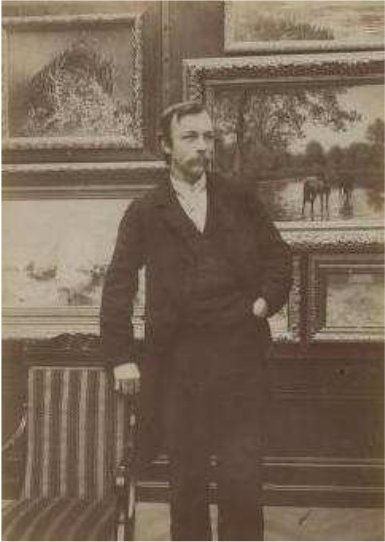
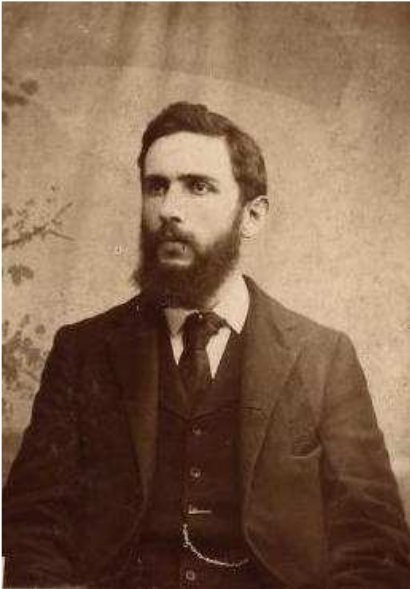
  • Finally, I got a start on Dear Tucker: The Letters from John Henry Mackay to Benjamin R. Tucker, which run from 1905 to 1933 (ed. and trans. by Hubert Kennedy, 2002). I haven’t gotten deep enough in for any interesting pull-quotes from the text. But I did come across these rad portraits of Clarence Lee Swartz (a frequent contributor to Liberty and author of What Is Mutualism?) and Steven T. Byington (another frequent Liberty correspondent, founder of Liberty’s Anarchist Letter Writing Corps, and the translator of Stirner). Both photos are from the Labadie Collection.

    Clarence Lee Swartz (1868-1936)

    Steven T. Byington (1869-1957)

Over My Shoulder #48: from Nicholson Baker, “Human Smoke”

You know the rules. Here’s the quote. This is from Human Smoke, Nicholson Baker’s sparely-written, chapterless skein of documentary vignettes retelling the events that led up to World War II.

Cyril Joad, a philosopher who was writing a book called Journey Through the War Mind, had a talk with his pacifist friend D. Joad asked D. whether D. thought Chamberlain should have negotiated with Hitler after Hitler’s peace offer. Yes, of course, said D.: Wars should never be begun, and as soon as they were begun, they should be stopped. D. then listed off many war evils: the physical and moral mutilation, the intolerance, the public lying, the enthronement of the mob. He quoted from the text of Chamberlain’s refusal–that by discussing peace with Hitler, Britain would forfeit her honor and abandon her claim that international disputes should be settled by discussion and not by force. Our claim is, you see, D. told Joad, that international disputes are not to be settled by force, and this claim we propose to make good by settling an international dispute by force. We are fighting to show that you cannot, or at least must not, impose your will upon other people by violence. Which made no sense.

Once a war has started, D. said, the only thing to do is to get it stopped as soon as possible. Consequently I should negotiate with Hitler.

Joad said: Ah, but you couldn’t negotiate with Hitler because you couldn’t trust him–Hitler would break any agreement as soon as it benefited him to do so.

Suppose you were right, D. said–suppose that Hitler violated the peace agreement and England had to go back to war. What had they lost? If the worst comes to the worst, we can always begin the killing again. Even a day of peace was a day of peace. Joad found he had no ready answer to that.


Cyril Joad talked about the war with another acquaintance, Mrs. C., a vigorous Tory. War was natural and unavoidable, said Mrs. C. The Germans weren’t human–they were brute blond perverted morons.

Joad asked C. what she would do with Germany, and a light came into her eyes.

I would make a real Carthaginian peace, she told Joad. Raze their cities to the ground, plough up the land and sow it afterwards with salt; and I would kill off one out of every five German women, so that they stopped breeding so many little Huns.

Mrs. C.’s ideas were shared by others, Joad had noticed; he’d recently read a letter to the editor about Germany in London’s News Chronicle: Quite frankly, said the letter, I would annihilate every living thing, man, woman, and child, beast, bird and insect; in fact, I would not leave a blade of grass growing even; Germany should be laid more desolate than the Sahara desert, if I could have my way.

The longer the war lasted, Joad believed, the more this kind of viciousness would multiply: Already Joad wrote, Mr. Churchill was reviving the appellation Huns.

— Nicholson Baker (2008), Human Smoke: The Beginnings of World War II, the End of Civilization. ISBN 1-4165-7246-5. 154–155

Over My Shoulder #48: from Nicholson Baker, “Human Smoke”

You know the rules. Here’s the quote. This is from Human Smoke, Nicholson Baker’s sparely-written, chapterless skein of documentary vignettes retelling the events that led up to World War II.

Cyril Joad, a philosopher who was writing a book called Journey Through the War Mind, had a talk with his pacifist friend D. Joad asked D. whether D. thought Chamberlain should have negotiated with Hitler after Hitler’s peace offer. Yes, of course, said D.: Wars should never be begun, and as soon as they were begun, they should be stopped. D. then listed off many war evils: the physical and moral mutilation, the intolerance, the public lying, the enthronement of the mob. He quoted from the text of Chamberlain’s refusal—that by discussing peace with Hitler, Britain would forfeit her honor and abandon her claim that international disputes should be settled by discussion and not by force. Our claim is, you see, D. told Joad, that international disputes are not to be settled by force, and this claim we propose to make good by settling an international dispute by force. We are fighting to show that you cannot, or at least must not, impose your will upon other people by violence. Which made no sense.

Once a war has started, D. said, the only thing to do is to get it stopped as soon as possible. Consequently I should negotiate with Hitler.

Joad said: Ah, but you couldn’t negotiate with Hitler because you couldn’t trust him—Hitler would break any agreement as soon as it benefited him to do so.

Suppose you were right, D. said—suppose that Hitler violated the peace agreement and England had to go back to war. What had they lost? If the worst comes to the worst, we can always begin the killing again. Even a day of peace was a day of peace. Joad found he had no ready answer to that.


Cyril Joad talked about the war with another acquaintance, Mrs. C., a vigorous Tory. War was natural and unavoidable, said Mrs. C. The Germans weren’t human—they were brute blond perverted morons.

Joad asked C. what she would do with Germany, and a light came into her eyes.

I would make a real Carthaginian peace, she told Joad. Raze their cities to the ground, plough up the land and sow it afterwards with salt; and I would kill off one out of every five German women, so that they stopped breeding so many little Huns.

Mrs. C.’s ideas were shared by others, Joad had noticed; he’d recently read a letter to the editor about Germany in London’s News Chronicle: Quite frankly, said the letter, I would annihilate every living thing, man, woman, and child, beast, bird and insect; in fact, I would not leave a blade of grass growing even; Germany should be laid more desolate than the Sahara desert, if I could have my way.

The longer the war lasted, Joad believed, the more this kind of viciousness would multiply: Already Joad wrote, Mr. Churchill was reviving the appellation Huns.

— Nicholson Baker (2008), Human Smoke: The Beginnings of World War II, the End of Civilization. ISBN 1-4165-7246-5. 154–155

Over My Shoulder #45: How Empire comes home in sado-statism and police brutality. From Fred Woodworth, “Evil Empire Notes,” in The Match! # 107 (Summer, 2009)

Here’s the new rules:

  1. At the top of the post, make a list of the books you’ve read all or part of, in print, over the course of the past week, at least as far as you can remember them. (These should be books that you’ve actually read as a part of your normal life, and not just something that you picked up to read a page of just in order to be able to post your favorite quote.)

  2. Pick one of those books from the list, and pick out a quote of one or more paragraphs, to post underneath the list.

  3. Avoid commentary above and beyond a couple sentences, which should be more a matter of context-setting or a sort of caption for the text than they are a matter of discussing the material.

  4. Quoting a passage absolutely does not entail endorsement of what’s said in it. You may agree or you may not. Whether you do isn’t really the point of the exercise anyway.

Here’s the books:

  • Sonia Johnson (1989). Wildfire: Igniting the She/Volution. (Albuquerque: Wildfire Books. I picked it up some time ago through BookMooch.)
  • Richard Gombin (1975), The Origins of Modern Leftism. Translated from the French by Michael K. Perl. (Baltimore: Penguin. Picked up this very week for 49¢ from the Shaman Drum used books sale rack!)
  • Fred Woodworth, The Match! Issue No. 107 (Summer, 2009). (Tucson: Fred Woodworth. PO Box 3012, Tucson, Arizona 85702. I picked my copy up last week from May Day Books in Minneapolis.)

And here’s the quote. This is taken from Fred Woodworth’s Evil Empire Notes, Issue No. 107 of The Match! (Summer 2009; also, incidentally, the 40th anniversary issue of The Match!). This was airplane reading, taken in somewhere in the sky between Minneapolis and Las Vegas.

GIVEN all the millions of horrifying stories in the naked country, now and then it’s good to pluck out one to hear an authentic voice rather than a statistic. Amnesty International printed up this one, by Donald Boyd of Chicago:

I have been a victim of racial profiling since I was 17 years old. Once when I was walking to the cleaners, I stopped to talk with some young men…. When I walked away, the police just automatically accused me of purchasing drugs. Two officers jumped out of a car and kept asking What did they sell you? I repeatedly replied no one sold me anything. … They cuffed me and drove me to a police substation.

… The next morning they loaded 45 people into a van made for 32. The men were almost all black and Latino. When we arrived at the jail, sheriff’s deputies, dressed in riot gear, met us. They shouted obscenities and threats. The deputies assaulted several people, including me, for supposedly not complying with their every word.

At each step in the process—arrest, detention and bond hearing—we were lined up, and numbers were scribbled on our arms with black marking pens…. In court, you appear before a judge, but via a television screen. You don’t get to speak, and the judge never even looks you in the face…. They treat our communities with disdain and contempt. I had to hire a lawyer and spend thousands of dollars to get the charges dismissed….


AS Law becomes increasingly complex, with hundreds of thousands and even millions of laws stacked on top of each other, almost no one can confront officialdom in any way without a lawyer. But what happens when your lawyer takes your money and does no work, don’t file basic motions or writs, and essentially shafts you? Not much. Bar associations have a cap of compensatory payments they sometimes make to incompetent or dishonest lawyers’ clients, but the amouts are often based on century-old, or even older, stated maximums. And it’s next to impossible to go after such a lawyer legally, because to do so you need… another lawyer.


. . .

EIGHT COPS raided a home in Minneapolis in ‘08. They shot up the place, accidentally not killing anyone. Well, it was the wrong house (there is no right house for something like this). This is completely comparable to a surgeon amputating the wrong leg, but if the doctor who did this to you then got a commendation from the medical association, wouldn’t you feel absolutely floored? So did the family whose home was raided and shot up. All eight cops received medals.

Undoubtedly this sounds like hyperbole or mere rhetoric, but the simple fact is that there is no conceivable way anyone can interpret this but as an official statement of Good Work, Men to stupid, negligent, incompetent thugs for terrorizing and injuring innocent people.


NOT SURPRISINGLY, when humanitarian spirit is dead in officialdom it’s not partly alive; it really is extinct and defunct. Also in Minnesota, a poor wild bear somehow got a plstic jar or bucket stuck on its head. Official solution: shoot the bear. No sympathy for an unfortunate creature; no imaginative or bold remedy. Just kill.


AS REPORTED by the Washington Post, prison guards at Prince George’s County Jail in Maryland are apt to be the kind of guys the average person expects to hear of as BEHIND bars. An investigation by the paper found guards who’ve been charged with assault, theft, beating and threatening their wives with death, having sex with prisoners, robbery at gunpoint, and other crimes.

Among the nine officers was Mark R. Bradley, whose then-wife asked for a protective order in 1998, claiming he had threatened, taunted, punched and slapped her… When she reached for the phone, Bradley who had been on the force for almost four years, yanked it away… His wife recalled him saying: Call the police… Make me lose my job. I’ll kill you. Almost a decade later, he was still on the payroll at the jail, despite three protective orders issued against him in the late 1990s. In 2004, he pleaded guilty to assaulting another woman, whose rib was broken. The woman, who had been pregnant with his child, told police that after a beating days earlier, she had a miscarriage. A judge put Bradley on probation and ordered him to take an anger management class.


AIRPORT FASCISM is being extended to railroads. Amtrak, the railroad passenger company, has brought in a SWAT-style phalanx of agents in full combat gear to sweep through train stations, randomly screening and searching passengers. The randomly chosen passengers will have to place their bags on a platform and be swabbed with chemicals that are claimed to react to traces of explosives. You can also be ratted out by dogs.


ONE OF THE factors that propelled the United States as far along into the police state that it now is, was the Vietnam War. There’s plenty of evidence that soldiers in ALL wars become brutalized, but something extraordinary seems to have taken place in Vietnam. Whatever it was, American men who went there (and survived) tended to come back in a vicious state of mind. Ordinary people were their enemy. They made up stories (essentially none has ever been verified) of people spitting on them when they arrived at stateside airports; and they formed cliques of us-versus-them. Looking for work, a high proportion of them went into law enforcement, and there they reinforced and amplified the already-existing us versus them mentality, ratcheting the propensity toward police brutality to amazing heights.

Now the same thing is happening with Iraq. Our guess is that the psychological corruption happens when soldiers fight amid a culture and a language that has few points of contact with the west and with Indo-European languages. It is one thing to fight, say, Germans or Italians, whose general culture is largely familiar (same religions, for instance) and whose languages have a large percentage of words that are the same or nearly enough so to be comprehensible even to the monolingual standard American youth. But in Vietnam—and now in Iraq—these military people are surrounded by words and behaviors utterly alien to them. Our own idle theory, therefore, is that this operate on their minds in such a way that the enemy becomes completely dehumanized. This creates the us-versus-them, and when they return to the USA, they still have it.

Then they go into law enforcement.

Already we are beginning to read about cases in which police—now Iraq war veterans—are opening fire on people merely running away from them. And already, too, the convoluted excuses are starting to evolve: Re-experiencing a war zone is one of several classic signs of combat stress reaction, says the Department of Veterans Affairs. If persistent and untreated, the Department goes on, this can result in post traumatic stress disorder.

Whatever verbal gimmickery you haul out to gloss over the facts, the truth is that these men (generally they are men) have been ruined, corrupted fatally and irretrievably, by being sent out to murder masses of people for no good reason in a country where they ought never to have gone. Mostly it’s their own fault, too, since ultimately it was their own volition that was compliant in their going there.

The bottom line is that Bush’s freudian effort to surpass his father’s Panama coup by similarly taking Saddam Hussein, unresisted by the press and the American people at the outset, is now going to result in thirty or forty more years of ever-worsening police violence against the public here. With this on top of everything else—the overpopulation, insanely burgeoning law-pollution, disastrous shift to digital culture, etc.—America is rapidly turning into an unliveable hell. Then add global warming.


IMMIGRATION PRISONS, where you’re sent for not having adequate proof of being a so-called citizen, are the new concentration camps of the Evil Empire. There are now a whole class of persons of various ethnicities who are afraid to travel outside of the towns or cities where they live, because of the possibility of being stopped by some profiling trick excused as a broken taillight, and then being sent sprawling into a cell at an immigration prison.

A recent well-publicized case in some of the larger newspapers (and excluded from the local dailies) concerned one Hiu Lui Ng, who’d come to the US from Hong Kong. Making the mistake of going to immigraiton headquarters in New York City to get a green card (legal authorization to live and work in this country), he was grabbed and put behind bars. There he developed cancer, was in severe pain, laughed at by the medical matrons, and eventually died from the rampaging and untreated disease.

. . . They denied him a wheelchair and refused pleas for an independent medical evaluation. Instead, … guards at the Donald W. Wyatt Detention Facility in Central Falls, Rhode Island, dragged him from his bed on July 30, craried him in shackles to a car, bruising his arms and legs, and drove him two hours to a federal lock-up in Hartford, where an immigration officer pressured him to withdraw all pending appeals of his case. (New York Times.)

One out of hundreds of thousands.

— Fred Woodworth, Evil Empire Notes, in The Match! Issue No. 107 (Summer, 2009). 19–21.

See also:

Over My Shoulder #43: how professional social workers colonized the maternity home movement, and what came after. From Ann Fessler, The Girls Who Went Away.

Here’s the rules:

  1. Pick a quote of one or more paragraphs from something you’ve read, in print, over the course of the past week. (It should be something you’ve actually read, and not something that you’ve read a page of just in order to be able to post your favorite quote.)

  2. Avoid commentary above and beyond a couple sentences, more as context-setting or a sort of caption for the text than as a discussion.

  3. Quoting a passage doesn’t entail endorsement of what’s said in it. You may agree or you may not. Whether you do isn’t really the point of the exercise anyway.

Here’s the quote. This is from the book I’ve been reading on and off most mornings this week, Ann Fessler’s The Girls Who Went Away: The Hidden History of Women Who Surrendered Children for Adoption in the Decades Before Roe v. Wade. This is from chapter 6, Going Away, which focuses on the institutional set-up of the maternity homes themselves and the experiences that pregnant women had when they arrived in them. Although this passage doesn’t discuss it, elsewhere in the book Fessler notes a couple of things which may help put the rest in context: first, Fessler points out elsewhere that, in all the social-work discussion of the causes of illegitimacy, every new wave of theory offered a different explanation of the unwed mother’s defects. Never discussed was whether unplanned pregnancies had anything to do with the personal characteristics, social position, attitudes, psychology, or actions of unwed fathers. The development of theory after theory by the self-styled experts was not a good-faith intellectual effort, and it didn’t emerge in an ideological vacuum; it was theorizing driven by the need to rationalize a social process of shaming and blaming. Second, she also mentions elsewhere the emerging notion of social work professionalism, and the kind of coercive tactics they used, didn’t emerge in an institutional vacuum, either; they were caught up with the fact that maternity homes were increasingly being transformed into intermediaries in health and social services spending by state governments. Women mentioned how social workers would coerce them into surrendering, if they expressed second thoughts, by saying that they would have to pay the state back thousands of dollars for their stay in at the maternity home and for their hospital bills. At the far extreme, one of the women she interviews mentions a case she had heard of, in which a mother who refused to relinquish was forcibly committed to a state mental hospital (on the grounds that she must be crazy) until she agreed to surrender her baby, months later. Anyway. Keeping that in mind, on with the quote:

For most of the women I interviewed, however, especially those who were younger, being sent to a maternity home was a traumatic experience. They had been banished from their schools and homes, they were soon to give birth to a child, and rather than being surrounded by caring family members they were living in institutions among strangers. Although many felt camaraderie with the other young women who were there, they also felt that the environment was cold and demeaning and that the disapproval of those who looked after them was palpable.

The philosophy and mission of maternity homes had changed considerably since the early 1900s, when the maternity-home movement began. The religious women who first ran the homes saw themselves as sympathetic sisters who were there for women who had no other place to turn. The home was a place of refuge and spiritual reform for women who had, in their eyes, been seduced and abandoned. Motherhood, they believed, would increase a woman’s chances of living a good and proper life. During this time, babies were not separated from their mothers except under extreme circumstances, as when women cannot be helped or compelled to meet their obligation as parents. The homes generally encouraged bonding through breast-feeding and they helped the women find employment—usually as domestic servants—which would enable them to care for their child and to work. Well into the early 1940s, some homes still encouraged, if not required, the mother to breast-feed her baby to ensure that a bond developed between mother and child.

But by the end of World War II, a sea change had occurred in the mission and philosophy of the homes. Maternity homes of the 1950s and 1960s were, to a great extent, a place to sequester pregnant girls until they could give birth and surrender their child for adoption. If a young woman was unsure of or uninterested in relinquishment, the staff attempted to convince her that it was her best, and perhaps only, option. Though maternity homes were the only place a girl in trouble could turn for help outside of her family, by the 1950s they best served her interest if her interest was in giving her child up for adoption at the end of her stay.

The change in philosophy was highly contested among those who ran the homes and did not come about uniformly. To a great extent the views at individual homes changed as the staff changed. Between the turn of the century and the 1940s, the women who had founded the homes were supplanted by professional social workers who reshaped the understanding of nonmarital pregnancy.

In the first two decades of the twentieth century, social work evolved into a genuine profession, and those who helped professionalize the field were eager to differentiate themselves from charity workers and reformers, whom they saw as overly sentimental and old-fashioned. These professionals formulated what they considered to be more rigorous approaches to social problems, rather than basing their practices on religious perspectives. As the professionals took positions at maternity homes and began to work alongside religious reformers, philosophical clashes resulted. Social workers claimed expertise. As trained professionals, they considered themselves better equipped to diagnose the problems associated with illegitimacy. While their religious predecessors had generally attributed out-of-wedlock pregnancy to the social circumstances of the women’s lives and to outside social forces, the new breed of social worker focused on the women themselves. Over many years, they posited a number of theories about why single women became pregnant, all of which were predicated on the problems inherent in the women themselves.

In the early 1900s, most social workers argued that women who became pregnant out of wedlock were feebleminded; their pregnancy was proof of their feeblemindedness. This made them seem especially dangerous to society because it was believed that these women were not only likely to be repeat offenders, but that they would produce offspring of low intelligence, claiming that the country was in the midst of moral decay and that the family was breaking down, as evidenced by lower birthrates among the better classes of people. They believed that unwed mothers were both the product of bad homes and the cause of broken homes. During this time the concern over nonmarital pregnancy was so great that many feebleminded unwed mothers were either institutionalized or sterilized.

Classifying all unwed mothers as feebleminded, however, proved impossible. Social workers had to acknowledge that many of the women who became pregnant were normally intelligent and relatively well-balanced young women. So a new category was identified, that of the delinquent. This type of womanhad a parallel in the male population. But where delinquency in the male was identified by criminal behavior, female delinquency was defined in sexual terms. The young women who fell into this category were largely seen as those belonging to the working class. By the 1920s, many single women were working in factories, offices, and department stores. They enjoyed a degree of independence and opportunities to fraternize with men. Their sexual lives did not always conform to middle-class standards and in those cases were labeled sexually deviant. This behavior, incidentally, was soon to invade the ranks of the middle class.

Despite the widespread characterization of unwed mothers as either feebleminded breeders or sex delinquents, letters and internal correspondence from Florence Crittenton homes operating in the 1940s offer evidence to the contrary, and the personnel at the homes were still generally supportive of and empathetic to the girls in their charge. A concrete example of such support was found in the application materials for the Kate Waller Barrett Scholarship, which was sponsored by the Crittenton homes in the early 1940s. These scholarship funds were described in materials printed by the Florence Crittenton Mission as being available to a girl who wishes to continue her education to enable her to care for her child. The application required support letters from the superintendent of the home and if the application was successful, the agreement stipulated that the staff at the Crittenton Home would assume responsibility for the care of the child, if necessary, while the mother attended school.

[…]

The kind of support and compassion demonstrated by maternity-home staff in these letters seems to have all but evaporated in the years after World War II. The ongoing struggles between those who aligned themselves with the sentiments of maternity-home founders and those who adopted newer professional strategies came to a symbolic if not an actual end in 1947, when the National Florence Crittenton Mission abandoned its policy of keeping mother and child together.

As the philosophical differences narrowed in the 1940s and social workers coalesced towards agreement on the best course of action for unwed mothers and their babies, efforts to identify the cause of out-of-wedlock pregnancy took a new turn. With the dramatic rise in premarital pregnancies after the war, and as greater numbers of middle-class women became pregnant, it became increasingly implausible to label all of those women as either feebleminded or sexual delinquents. Social workers noted that many of these new unmarried mothers were middle-class girls from good families. A Crittenton social worker wrote about these girls that the sizeable numbers further confound us by rendering our former stereotypes less tenable. Immigration, low mentality, and hyper sexuality can no longer be comfortably applied when the phenomenon has invaded our own social class—when the unwed mother must be classified to include the nice girl next door, the physician’s or pastor’s daughter.

Social workers turned to the growing field of psychiatry for their answer and, as early as the 1940s, began to classify middle-class girls who became pregnant as neurotic: the unwed mother was a neurotic woman who had a subconscious desire to become pregnant. This theory dominated much of the diagnosis and treatment of unwed mothers in the decades that followed the war. Though social workers had been quick to condemn working girls as sex deviants, this new explanation was more appealing in explaining middle-class pregnancy because it downplayed the issue of sexual drive. By identifying the young woman’s goal as pregnancy, rather than sex, the diagnosis of deviance could be bypassed. Though a young woman’s peers, family, and community may still have attributed her pregnancy to loose morals or an overactive sex life, professionals determined that the problem was in her mind.

One of the outcomes of this new professional diagnosis was the justification of the separation of mother and child: a neurotic woman was seen as unfit to be a mother. Given the stigma of illegitimacy in the 1950s and 1960s, many middle-class parents were quick to agree that the solution to the problem was relinquishment and adoption. Following this course, their daughter would be given a second chance. Her pregnancy would effectively be erased from her history and she could expect to go back to a normal life as if it had never happened. Without her child she would be able to marry a decent man and have other children. She would not have to live with her mistake. Adoption also came to be understood as being in the best interest of the child. Rather than growing up with the stigma of illegitimacy and an unfit, neurotic mother, the child would be raised by a stable, well-adjusted married couple.

And though some maternity-home workers were still empathetic to young women who did not want to surrender their baby for adoption, in the postwar years this breed of social worker was rapidly becoming extinct. Internal struggle at the maternity homes continued even into the 1950s, and are evident in correspondence between the leadership of the Florence Crittenton Association of America and the newly hired staff of individual homes. In a letter dated December 23, 1952, Robert Barrett, the chairman of the Florence Crittenton Mission, expresses his concern over a move to shorten the minimum length of a girl’s stay in the maternity home postpartum. The purpose of a mother’s and child’s returning to the home after birth was, Barrett asserts, to give the mother time to be with her baby before making a final decision to surrender. He writes:

Personally I feel very badly that a girl in our Homes shall not be given every opportunity and help to keep her baby if she wants to. Often a girl who has made up her mind to give up her baby feels different after the baby comes and her mother’s instinct is aroused. Not to give her that chance seems a cruel and unnatural proceeding. I am not sure but I feel it would be better for the girl if she tries to take her baby and fails and has to give it up later.

The new policies were shaped by the experts—primarily psychiatrists, social workers, and medical professionals—and promoted by social organizations that had the power and the means to disseminate the ideas. The women whose babies were being placed for adoption were not in any position to influence the policies made on their behalf. Shame is a very effective way to silence individuals, and those who are less socially or economically powerful are rarely in a position to influence the decisions that affect them.

[…]

In theory it was not the social worker but the mother who made the ultimate decision whether to parent or relinquish. A Florence Crittenton brochure from 1952 reads, The mother is under no compulsion, either to leave her baby with us, or to take him with her. There is no priority for either. But it also states that although the mother should perhaps make the choice, not always is she well qualified to make this last decision. And though maternity homes were thought to be safe havens and the goal of all these efforts combined is to induct into society a mother and child, each well started on the road to successful living, in reality this goal was often not fully realized.

Rather than young women being given a realistic picture of the responsibilities and costs of raising a child and allowing them to weigh that information against the resources available to them so they could participate in making an informed decision, they were rendered powerless. And though it might be easy to empathize with a social worker’s efforts to try to persuade a young woman of few resources to be realistic about raising a baby, especially if she lacked family support and did not understand the difficulty and sacrifice involved in raising a child as a single parent, the persuasive techniques were often quite forceful. The degree of pressure put on the women to surrender sometimes crossed the line from persuasion to outright coercion. Many of the women I interviewed recalled high-pressure campaigns waged by the maternity-house staff.

I remember the woman at the adoption agency, a very pleasant woman, smiling, always smiling, and using comforting tones. She sat there and said that I had nothing to offer a baby. I had no education, I had no job, I had no money. Oh, God, they really knew how to work you. Talk about no support, it was how far can we beat you down while we’re smiling?

The social worker was telling me, No man is going to want to marry you, no man is going to want another man’s baby. She proceeded to tell me that the adoptive parents they would find for the baby would be college educated, degreed, they would be much older, they would own their own home, have high incomes. They would be able to give the baby everything that I could not.

They told me I was unfit because I wasn’t married. I didn’t have this, I didn’t have that. Well, it turns out her adoptive parents were just a couple of years older, and neither one had a college education. Nothing against them, but the adoption agency lied to me. They also divorced when she was fourteen. I’m with the same man for thirty-eight years. Financially, her adoptive family was better off than we were, but other than that it wasn’t anything like what the agency promised.

—Christine

The argument that others would be better parents presumed, of course, that the mother’s own economic standing would not improve anytime soon, if ever, through further education, job or career training, marriage, or family support. It also presumed that the adopting couple’s status would not deteriorate through divorce or job loss. Essentially, the gap in economic and marital status between the mother and adoptive family was seen as fixed, whereas only a decade earlier the mother’s circumstances had been viewed as temporary and improvable, and steps were taken to help her become self-reliant.

In the postwar years, most of the homes aimed simply to ensure that the physical needs of the women were met until they could give birth and relinquish the baby. And despite the momentous life change that they were about to go through, most were sent to the hospital knowing nothing about childbirth, nor were they counseled about the impending separation. Most were completely unprepared for the emotions that would follow their transition from pregnant girls to mothers.

[…]

Of course, the pregnant women who went into hiding were not of one mind; nor were the staff of the institutions they entered. A few women reported that they were counseled in a respectful manner and came to their own decision. But the majority of the women I interviewed did not make a decision to surrender. Many women, even those in their twenties, followed the only path that was available to them—the one prescribed by society, social workers, and parents. After all they had been through, and all they had put their parents through, they felt that, more than anything, they needed to regain their family’s acceptance. Some women decidedly did not want to surrender but were unable to devise a plan that would allow them to care for their baby without some temporary assistance. Many of the women who wanted to parent would have been capable of doing so with a modest amount of support, the kind offered to Bea only a decade or so earlier. But by the mid-1960s professionals were no longer offering this kind of support, and more than 80 percent of those who entered maternity homes surrendered.

—Ann Fessler (2006), The Girls Who Went Away: The Hidden History of Women Who Surrendered Children for Adoption in the Decades Before Roe v. Wade. New York: Penguin. 142–153.